
Computer-Implemented Inventions and Patents
Securing patent protection for Computer-Implemented Inventions (CII) is a complex challenge due to the varying legal standards across jurisdictions. Without a well-structured approach, patent applications face risks of rejection, delays, and increased costs. At Improve IP, we specialize in navigating these complexities, ensuring your CII patents meet the specific requirements of major patent offices (EPO, USPTO, CNIPA, KIPO, JPO, CIPO, etc.) while maximizing protection and enforceability.
Drafting CII patent applications based on the ‘greatest common denominator’ approach, anticipating requirements from the EPO, USPTO, CNIPA, and other major offices for robust international consistency.
Strategic and International Patent Drafting
EPO Patent Prosecution & COMVIK Expertise
Representing applicants during prosecution, relying on deep expertise in the COMVIK approach; and Defending or challenging CII patents in EPO opposition and appeal proceedings.
USPTO Eligibility (Alice/Mayo Test)
Strategic claim adaptation for the USPTO’s Alice/Mayo eligibility test and managing prosecution to preempt objections regarding abstract ideas and patentable subject matter.


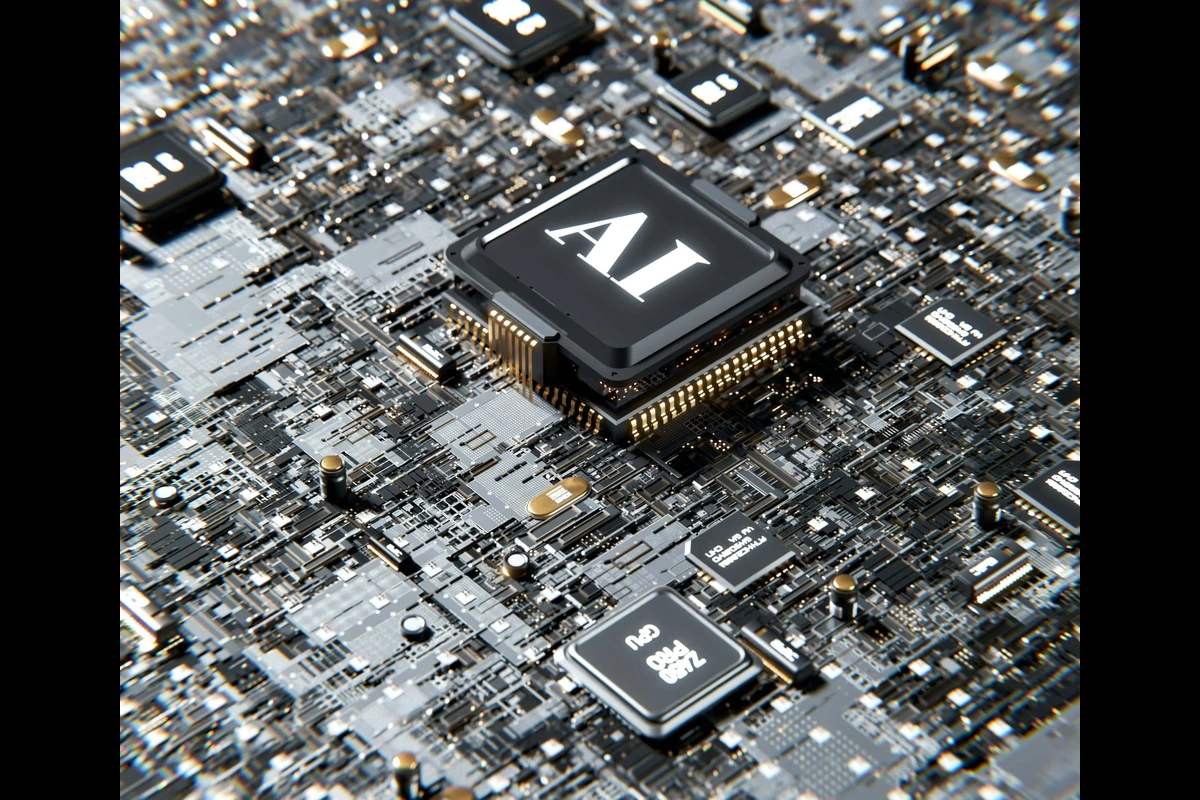



Computer-Implemented Inventions: Definition & Key Technologies
Computer-implemented inventions refer to innovations that rely on computers, networks, or programmable devices to implement at least a feature of a technical solution. These inventions involve data processing methods and are at the core of modern technologies including:
• Artificial Intelligence (AI) (IPC G06N) → Machine learning models, neural networks, predictive analytics.
• Blockchain & Fintech (IPC G06Q, IPC H04L) → Cryptographic security, smart contracts, financial transaction automation.
• Internet of Things (IoT) (IPC H04W, IPC G06F) → Smart devices, edge computing, industrial automation.
• Software & Cloud Computing (IPC G06F, IPC G06Q) → Virtualization, SaaS platforms, database management systems.
The patentability of CII is subject to varying legal interpretations across jurisdictions (see EPO requirements here), requiring careful consideration of regional legal frameworks.
When seeking patent protection for CII, patent applications must be meticulously drafted to comply with the specific requirements of each jurisdiction. Improperly drafted applications, especially claims, can lead to formal objections, increased costs, and even rejection of the application.
At Improve IP, we specialize in drafting CII patent applications with a strategic approach that considers the greatest common denominator of major patent offices’ requirements, such as the EPO, USPTO, CNIPA, and JPO. By strategically drafting claims to align with key jurisdictional requirements, we minimize procedural hurdles and reduce costs, ensuring robust protection for your innovations across major markets.
Patentability of Computer-Implemented Inventions Across Jurisdictions
Europe (EPO) – The two-hurdle approach and the COMVIK analysis
At the European Patent Office (EPO), the patentability of computer-implemented inventions is assessed using what is commonly referred to as the two-hurdle approach. This approach is particularly relevant for software-related inventions, as Article 52 of the European Patent Convention (EPC) states that a computer program, ‘as such’, should not be regarded as an invention. Comprehensive details on how the EPO assesses the patentability of computer-implemented inventions are available here, with a concise summary provided below.
First Hurdle (Article 52 EPC) – Is the claim an invention ?
The first stage of the EPO’s two-hurdle approach relates to patent eligibility under Article 52 EPC. At this point, the question is whether the claimed subject-matter can be regarded as an “invention” in the sense of the European Patent Convention.
Since decision T258/03 (Hitachi), EPO case law consistently confirms that while computer programs “as such” are excluded from protection under Article 52(2) and (3) EPC, claims that involve technical means, for example any hardware component in a CII, are not excluded and qualify as inventions.
In practical terms, a method claim that specifies it is “computer-implemented” passes this first hurdle, since it explicitly refers to technical means. Still, this step alone does not guarantee patentability: to be granted, the invention must also demonstrate an inventive step, which is assessed in the second hurdle of the approach.
Second Hurdle (Article 56 EPC) – Does the claim involve an inventive step
The second hurdle of the EPO’s two-hurdle approach addresses inventive step under Article 56 EPC. Once a computer-implemented invention (CII) is considered eligible under Article 52 EPC, the key question becomes whether the invention provides a technical contribution over the prior art.
Because most CII claims are mixed-type inventions, combining both technical features (e.g. processors, memories) and non-technical features (e.g. business rules or organizational steps), assessing inventive step is often complex for both Examiners and Applicants, as it requires carefully distinguishing which features genuinely contribute to the technical character of the invention.
To bring consistency in the evaluation of inventive step for mixed-type inventions, the EPO’s Boards of Appeal established the COMVIK approach (decision T0641/00). This approach adapts the classical problem-solution methodology to mixed-type inventions and has since become the standard framework for assessing inventive step of CII before the EPO.
According to the Comvik approach:
• only the features of a claim that contribute to a technical effect serving a technical purpose over the prior art can support inventive step;
• non-technical features that differentiate the claim from the prior art but do not serve a technical purpose may be taken into account as constraints when formulating the objective technical problem within the problem-solution approach.
With respect to the last point, this means that, contrary to the standard problem-solution approach, the objective technical problem may explicitly comprise distinguishing features of the claim as long as those features are non-technical features that do not contribute to the technical solution. In this case, they are part of the framework of the technical problem that is to be solved.
Effectively navigating the COMVIK approach requires more than technical and legal knowledge, it demands familiarity with evolving case law and practical experience with EPO prosecution strategies.
Without a deep understanding of the EPO’s approach to computer-implemented inventions, securing patent protection can be a daunting challenge in Europe. The intricate balance between technical and non-technical features requires expert handling to avoid rejections, especially based on inventive step.
For more detailed insights on how the European Patent Office assesses the patentability of computer-implemented inventions, consult our dedicated page. If you have questions or need tailored advice, feel free to contact our team here.
Our services for computer-implemented inventions before the European Patent Office
Protecting computer-implemented inventions before the EPO requires anticipating both eligibility and inventive step hurdles. At Improve IP, we provide tailored support at every stage:
• Drafting applications that emphasize the technical contribution of CII;
• Adapting claims when entering the European phase complying with Article 123(2) EPC;
• Representing applicants during prosecution, relying on deep expertise in the COMVIK approach; and
• Defending or challenging CII patents in EPO opposition and appeal proceedings.
Our approach combines EPO expertise with consistency across other major patent offices, ensuring your software innovations are protected by robust and enforceable patents. Our European expertise also extends to litigation before the Unified Patent Court (UPC), where we assist in defending and enforcing CII patents across Europe.
If you need further information with CII patent protection before the EPO, please feel free to contact us.
United States (USPTO) – The eligibility and the Alice/Mayo test
At the United States Patent and Trademark Office (USPTO), the patentability of computer-implemented inventions (CII) is assessed using the same statutory framework as for other types of inventions. Many CIIs however involve ‘abstract ideas’, which are considered judicial exceptions to patent eligibility under U.S. law. For professionals familiar with EPO practice, this concept is broadly comparable to “non-technical features,” although the terminology and legal consequences differ.
In the following sections, we provide a concise summary of how the USPTO examines the eligibility of CIIs that include one or more abstract ideas, and how such inventions can still be found patentable if they satisfy the requirements established under the Alice/Mayo framework codified in the USPTO’s examination guidelines (MPEP § 2106). If you look for an exhaustive analysis of the USPTO requirements for CII, please visit our dedicated webpage here.
Eligibility under Article 35 U.S.C. §101
According to established case law in the US, “laws of nature, natural phenomena, and abstract ideas are not patentable” (Diamond v. Diehr, 450 U. S. 175, 18 (1981)) considering that they are basic tools of scientific and technological work. More precisely, laws of nature, natural phenomena, and abstract ideas represent judicial exceptions which are not patentable according to Article 35 U.S.C. §101 of the patent law.
Some inventions involving judicial exceptions may however be considered patentable by the USPTO if they are not directed to a judicial exception, or if they amount to significantly more than the judicial exception.
As explained above, CII often involve ‘abstract ideas’ in the sense that claims of CII comprise limitations which may be qualified as ‘abstract ideas’ before the USPTO. You will find the details of what is qualified as an abstract idea by the USPTO in the dedicated webpage.
We therefore have to determine whether a CII claim is directed to an abstract idea or whether the CII claim amounts to significantly more than the abstract idea to determine whether this claim is patent eligible.
Alice/Mayo test: The eligibility framework
Determining whether a CII claim is directed to an abstract idea or if the CII claim amounts to significantly more than that idea, i.e. determining whether a CII claim is eligible according to the U.S. law, is actually applying the Alice/Mayo framework (also called the Alice/Mayo test). This test framework is systematically applied by USPTO’s Examiners to determine whether a CII claim is patentable or not.
For CII prosecution strategy, understanding Alice/Mayo is critical because eligibility rejections are one of the most common grounds for refusal in this technology field.
The Alice/Mayo test applied by the USPTO presents similarities with the Comvik Approach applied by the EPO.
Step 2A Prong One: Dividing elements of the claims between judicial exceptions and additional elements
According to the Alice/Mayo framework detailed in MPEP 2106, a claim comprising a plurality of elements (features/limitations) should be divided between elements reciting judicial exceptions (i.e. abstract ideas in the case of CII) and additional elements (i.e. elements which do not correspond to a judicial exception). This step is referred to as the Step 2A Prong One of the framework.
It is essential to distinguish between a feature that recites a judicial exception and one that merely involves a judicial exception, as emphasized in the USPTO memorandum issued on August 4, 2025.
Assuming that there are no judicial exceptions in the claim and that the claim is directed to one of the four statutory inventions, the claim is patent-eligible and the test ends.
For a CII claim, the claim is therefore divided between the features corresponding to abstract ideas and the other features, i.e. the additional elements, and the test continues.
Step 2A Prong Two: Determining whether the additional elements integrate the judicial exception into a practical application
Then, it has to be determined whether the additional elements of the claim integrate the abstract idea into a practical application. This step is referred to as the Step 2A Prong Two of the Alice/Mayo test.
The latter may for example be demonstrated by showing that the additional elements, eventually through their interaction with the features reciting a judicial exception, improve the functioning of a technology, as discussed in MPEP § 2106.04(d)(1).
When it is recognized that the additional elements integrate the abstract idea into a practical application, it is stated that the claim is not directed to a judicial exception and is considered eligible. Otherwise, the test moves on to step 2B.
For CII claims, it should be noted that the MPEP § 2106.04(d)(1) explicitly mentions the improvement of the computer’s functioning as a way to demonstrate that additional elements integrate the abstract idea into a practical application. Prong Two is often decisive for CII’s claim eligibility.
Step 2B: Determining whether the additional elements amount to significantly more than the judicial exception
Another way to establish that the claim is eligible is to demonstrate that the additional elements amount to significantly more than the judicial exception. This step is referred to as the Step 2B of the Alice/Mayo test.
In practice, it should be determined that at least one additional element or a combination of additional elements is non‑conventional for a person ordinary skilled in the art. Non-conventional may also be expressed as not well-understood or different from routine activities for the person ordinary skilled in the art.
When it is the case, it is recognized that the additional elements amount to significantly more than the judicial exception, and the claim is considered eligible. Otherwise, the test ends, and the claim is considered ineligible.
For computer-implemented inventions, however, Step 2B is particularly difficult to satisfy. Indeed, most computer-implemented methods are implemented using generic computing components which, according to the case law do not “amount to significantly more”. Hence, the eligibility discussion for CII claims before the USPTO is generally centered on Step 2A, Prong Two, where it is easier to show that the invention improves computer functionality or another technical field rather than to prove that the claimed additional elements, typically hardware components, are non-conventional.
Our services for protecting computer-implemented inventions in the United States
Securing CII patents before the USPTO requires addressing eligibility challenges under the Alice/Mayo framework. At Improve IP, we draft priority applications that anticipate both European inventive step and U.S. eligibility standards, while also integrating the practices of other major offices to ensure international consistency.
Our services for protecting CII in the U.S. include:
• Drafting CII applications that emphasize technical improvements to pre-empt eligibility objections;
• Adapting claims when entering the U.S. national phase, in particular through preliminary amendments tailored to eligibility issues under the Alice/Mayo framework;
• Managing Office Actions before the USPTO in close collaboration with trusted U.S. patent agents, ensuring we supervise the substantive CII strategy while leveraging local procedural expertise.
This combined approach ensures that your computer-implemented inventions are protected through coherent, cost-effective, and enforceable patents in the U.S. and worldwide.
If you need assistance with CII patent protection, please feel free to contact us